

Snow and ice work demands concentration in the field and meticulous planning before it. On top of that, your customers — and, if it comes to it, a court — will want detailed records of every plowing and salting run. Snow removal documentation is not a nice-to-have. In most cases it is the thing standing between you and a claim you cannot defend.
This article covers why that is, what belongs in a defensible record, how long to keep it, and how to make the whole process automatic instead of fighting it with paper and spreadsheets.
Why documentation matters
Whoever is responsible for a property, a sidewalk or a road has a duty to keep it reasonably safe for the people who use it. In the United States that duty sits under premises liability law, and the specifics vary by state and often by municipality. Simplified: if you have a hazard like an icy walkway, you are expected to take reasonable steps so that nobody is harmed by it.
Typically that duty falls on:
- Municipalities, for public streets, paths and squares
- Property owners and landlords, for the sidewalks and approaches to their property, unless the duty has been passed on by contract
- Contracted snow removal companies, where they have taken that duty on contractually
Clearing and salting is only half the job. In a dispute — after a fall on an icy walkway, say — you are the one who has to show what you did. Without documentation you generally have nothing to show.
This is a general overview, not legal advice. Duties, standards of care and deadlines vary by state and by contract. Check your own obligations with your attorney and your insurer.
Who documents, and what happens without it
| Responsible | Typical duty | Exposure without records |
|---|---|---|
| Municipality / public works | Clearing and treating public streets, paths and sidewalks | Tort claims, subrogation claims from insurers |
| Property owner | Clearing and treating the sidewalk at the property | Damages and injury claims |
| Landlord / property manager | Securing approaches, stairs, parking areas | Liability to tenants and visitors |
| Contracted snow removal company | The clearing and treating agreed in the contract | Contract penalties, indemnity claims from the client |
If there is an accident and you cannot produce a complete record, the doubt tends to run against you. That is exactly why more and more municipalities and contractors have moved to digital, automatically generated records rather than paper. Paper gets lost. It becomes illegible, or gets questioned after the fact.
What belongs in the record
For a record to hold up when it is tested, it should contain at minimum:
| Item | Example |
|---|---|
| Date and time (start and end) | 14 Jan 2026, 4:12am to 5:47am |
| Who performed the work | Employee or company name |
| Location / segment | Street section or property address |
| Type of work | Plowing, salting, inspection pass |
| Material used | Salt, sand, brine, including quantity |
| Weather conditions | Temperature, snowfall, ice |
| GPS record of the route | Automatically captured track |
The more precise and complete these are, the better protected you are. Doing that by hand is close to impossible at scale. This is exactly where a digital system earns its place, because it captures most of these points by itself.
How long to keep records
There is no single nationwide retention period, and personal injury statutes of limitations vary by state — commonly two or three years from the injury, sometimes longer, and often extended for minors. In practice it makes sense to keep snow removal records for at least three years, and preferably longer, because claims are sometimes brought years after the fact. With a digital system this is not a problem: everything stays stored and can be filtered by date and exported at any point.
The contractor's side: doing the work is not enough
Anyone out at 3am in freezing temperatures clearing and treating roads is doing the actual work. Nothing takes that away. All the same, with larger clients — municipalities, housing associations, property managers, facility management firms — it is often not only the work performed that decides the next contract. Whether you can prove it counts too.
Think of it like an insurance policy. Paying the premium does nothing for you if the paperwork is missing when you claim. Or like a permit application: it is not enough for the substance to be right; it has to be complete and in the right form. Proof of service in snow removal works much the same way. It is the paper form of work you already did well.
That is also why proof is sometimes so frustrating. You worked through the night. And then, on top of that, comes the requirement to document all of it cleanly. Done by hand, that costs time and patience.
It is still worth it. Word gets around among clients about who not only clears reliably but also has complete, well-presented records available at any time. Those are the contractors who get preferred at the next bid or renewal. Proof of service turns into a competitive advantage.
That is where xRouten comes in. You get support with the planning, which matters for the work itself — and at the same time you get, essentially automatically, all the records a client, a court or an insurer might ask for, with as little extra effort from you as possible.
Before documentation: get the routes digital
Having driven snow removal ourselves, we know what it is like to be out at 3am with a paper street map, a printed spreadsheet and a binder of site sketches. Admittedly, after the third time you know the route by heart. You still have to carry all that paper in the truck, in case something comes up.
So it pays to do the planning digitally before the season. That is the only way the route gets onto a phone or tablet and gets documented automatically and completely.
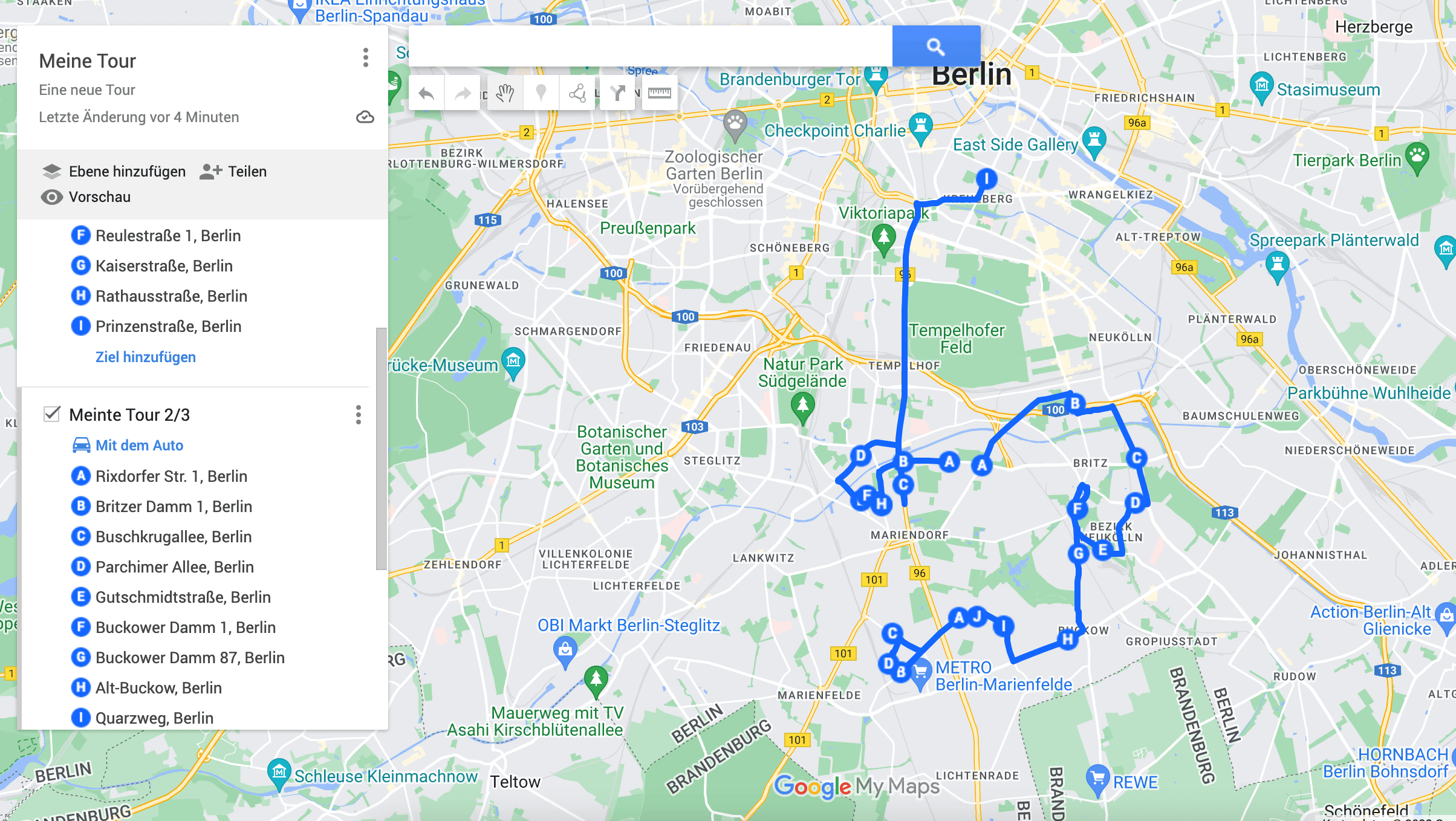
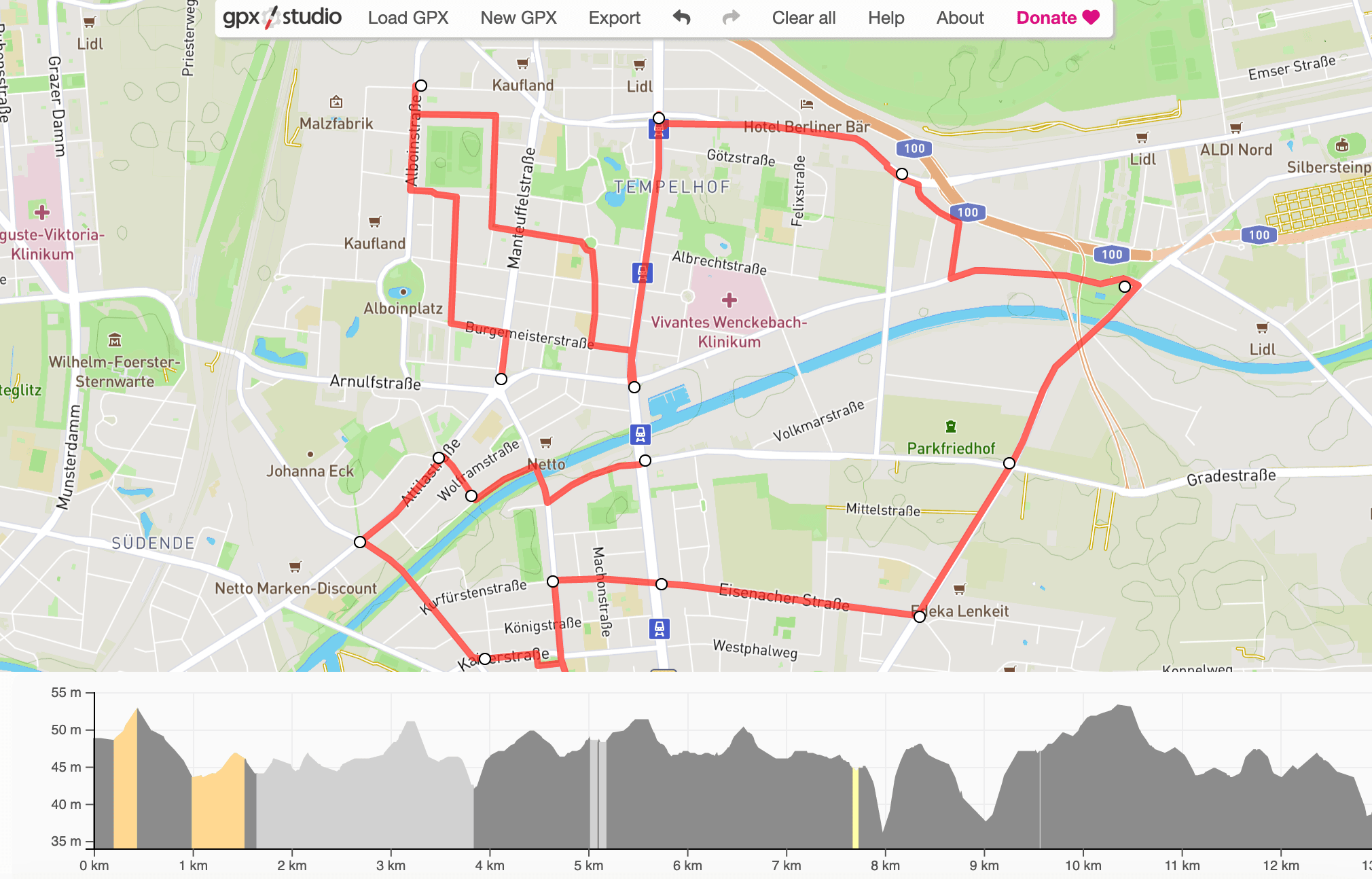
There are two ways to digitize routes in xRouten:
- Import a spreadsheet of addresses or coordinates, with all the other information attached
- Or draw your routes — the street segments — on the map with the mouse
You can mix the two. Which one applies depends on whether you service individual properties or whole streets. Either way, your digitized routes should end up looking roughly like this:
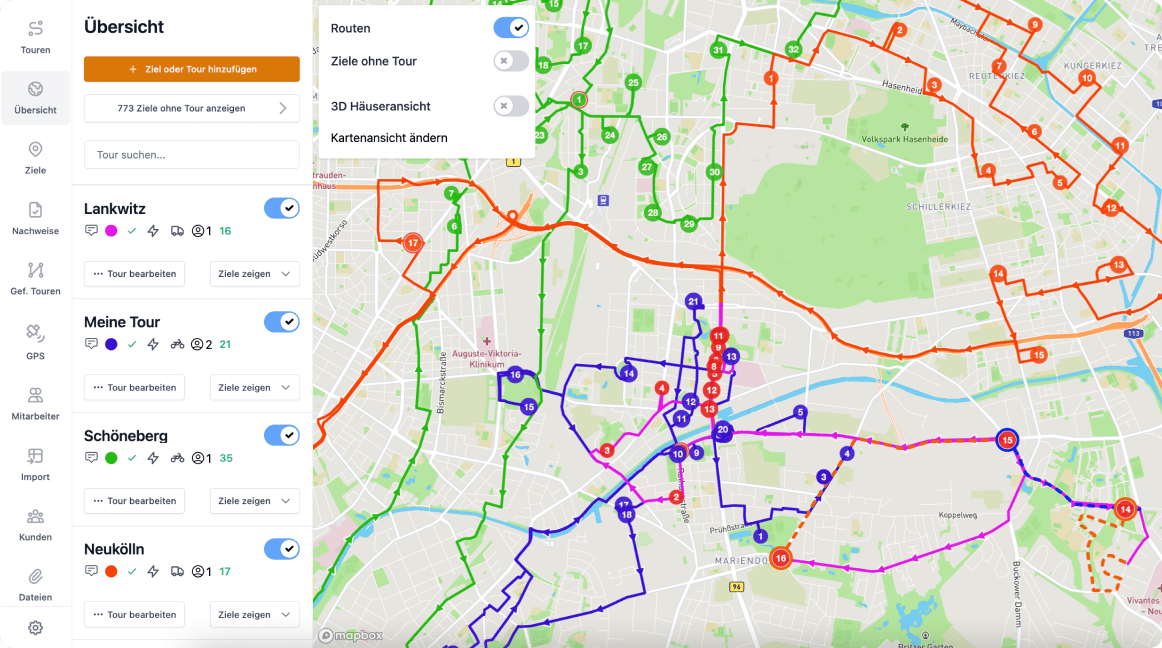
We have put together a number of guides on route planning if you want the detail.
You only have to do this once. Everything stays stored until the next season and can be exported whenever you need it.
During: capture the work automatically
Once your routes are digital you assign them to your crew, who open the xRouten app on a phone or tablet — any device works — and see the routes you planned in the right order with all the important information on a map. That saves an enormous amount of time onboarding new people, or when someone drops out at short notice.
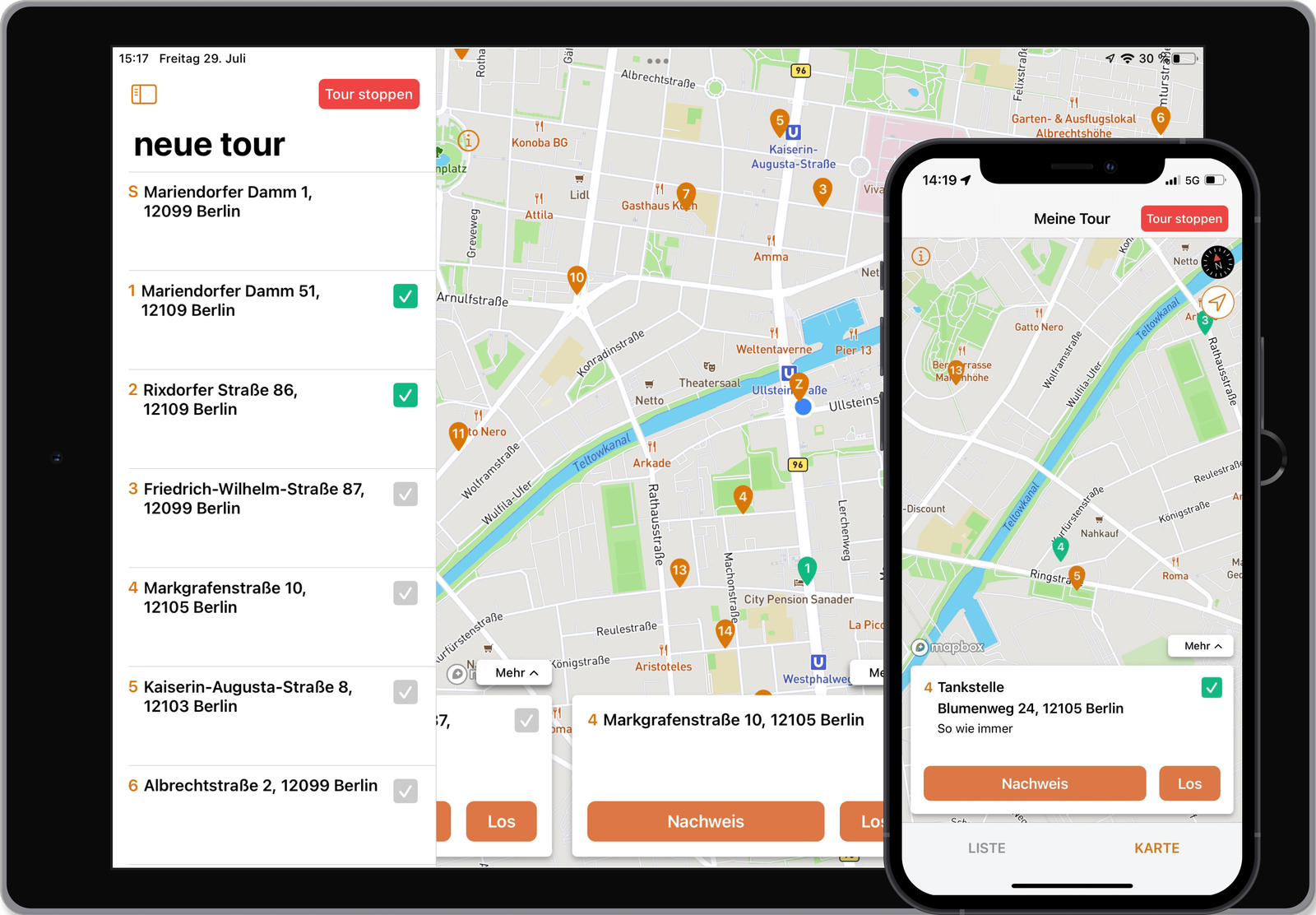
Your crew then only has to tap Start route. The app records everything by GPS and transmits it to the office in real time. It even recognizes when you are at a site and generates PDF records with your logo, for you and for your customers. Nobody has to tap at a display with a wet glove on. Here is the guide for that.
The advantage for your crew is that they see everything in the app, carry no paper and do not have to constantly check things off or fill things in. The advantage for you is that you can be sure no site gets missed and every route is cleanly documented by GPS. Which is to say, exactly the information that counts if there is a claim.
After: review and proof
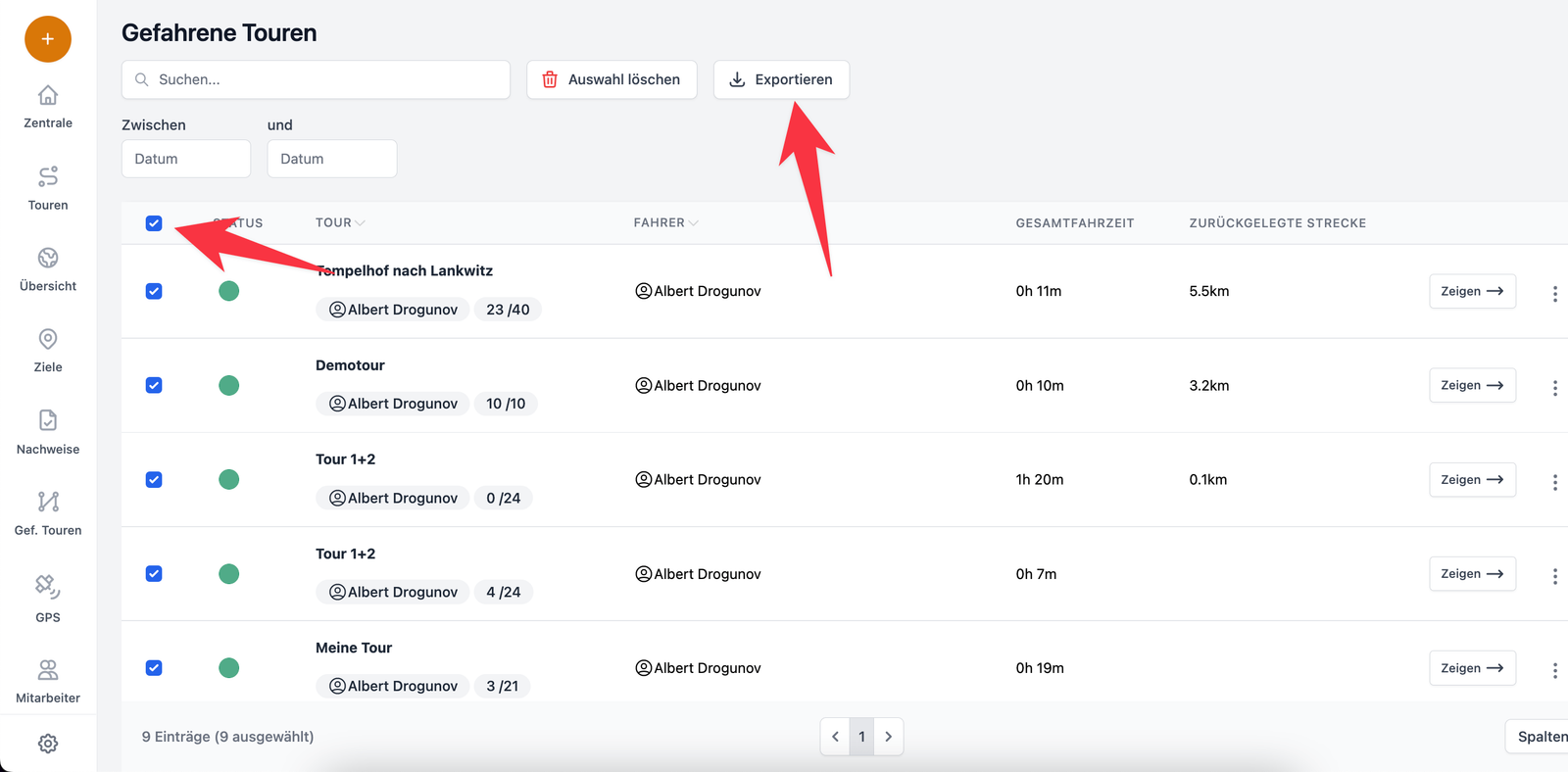
When the run is over, your crew taps Stop route in the app. You get a precise review and GPS record of every route:
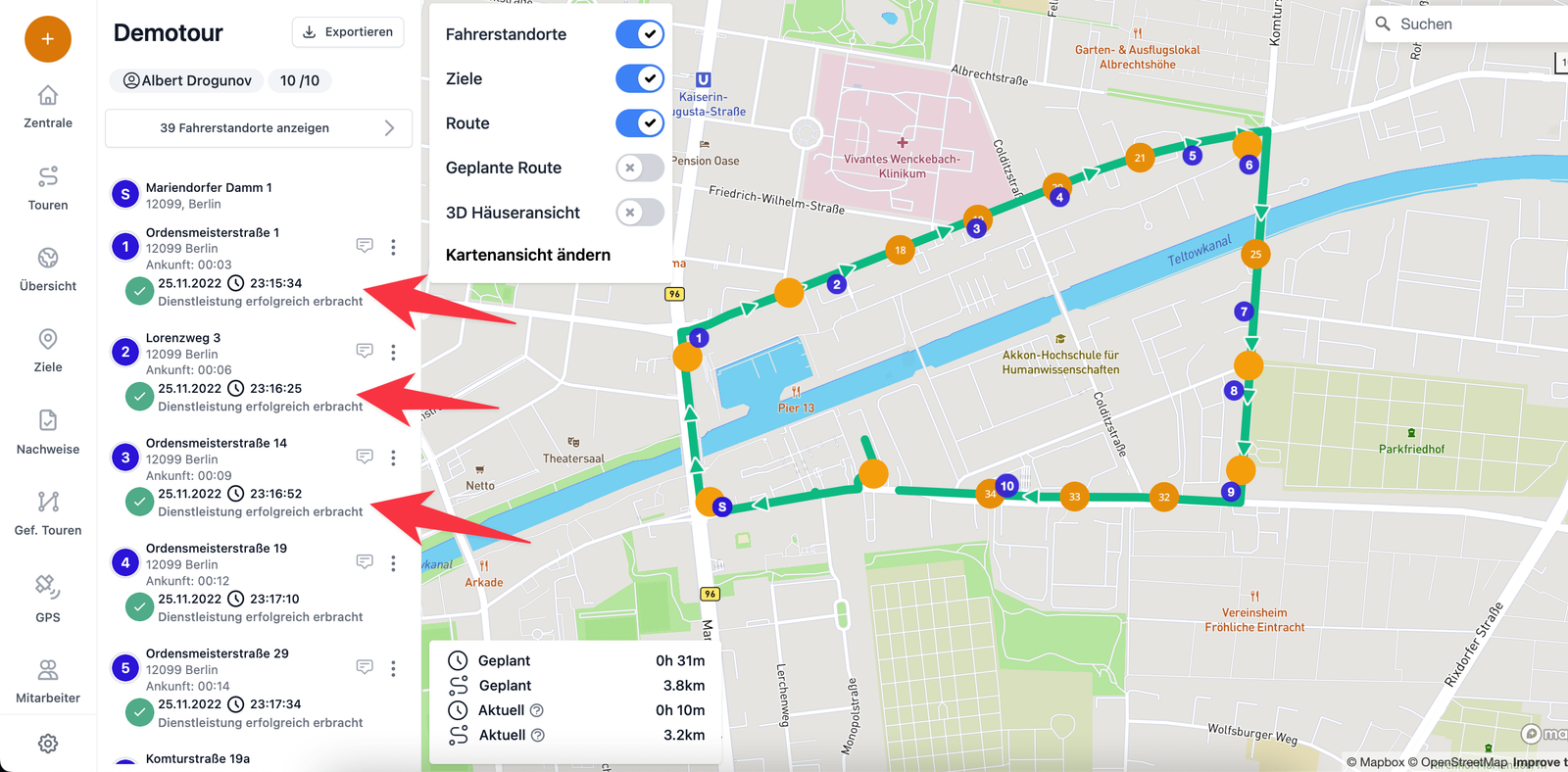
A point is placed on the map every 10 seconds. Those orange points are numbered and connected with a green line showing the path driven.
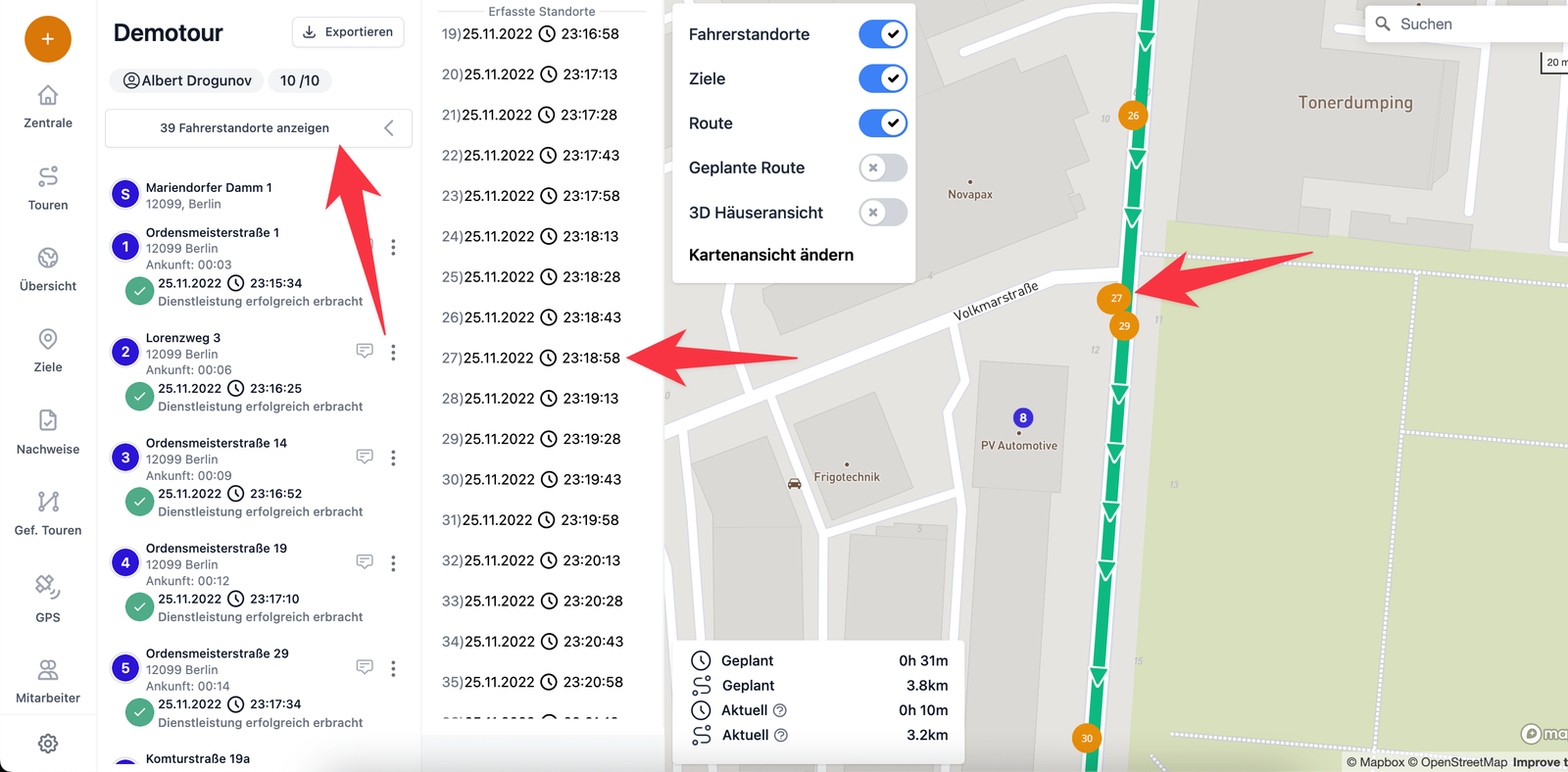
You can also pull up any individual location to the second and see it on the map, so you can see where your crew was and for how long. If an insurance claim comes up, you are covered, even if it comes up three years later. Everything is stored; you just filter by date.
All of it exports as a spreadsheet or PDF: times driven, distance, timestamps, driver names, addresses, latitude and longitude and more. You pick what you need.
One step further: a client portal instead of desk work
If you work for larger clients you know the pattern. At some point somebody asks whether and when a site was cleared, and you have to go and assemble the records and send them over. With xRouten that step disappears.
You can give clients their own access to their own portal, where they see the records for their own properties in real time. Or they get them automatically by email, including photos, a status such as "salted", "plowed" or "inspection pass", and the GPS and time information behind it.
The effect is that your client no longer has to ask — they look it up themselves. And you no longer have to assemble and send anything by hand. That is less desk work for you and noticeably better service for them. Details like that often decide who wins a bid or gets a contract renewed.
Frequently asked questions
Is snow removal documentation required by law?
An explicit "duty to document" is rarely written into law as such. It follows indirectly from premises liability and from the standard of reasonable care. Since you have to show in a dispute that clearing and treating happened, documentation is in practice indispensable. Many commercial contracts also require it directly.
Is a handwritten log enough?
In principle a handwritten salting log is admissible as evidence. The problem is that paper gets lost, becomes illegible or is questioned after the fact. GPS-based, automatically generated records are considerably stronger evidence.
Who is liable if nothing was documented?
Without records it is hard to demonstrate you met your duty of care, which raises the risk that a claim against you succeeds.
How long do I have to keep records?
There is no single fixed period, and statutes of limitations vary by state. Three to five years is the common practice, oriented on personal injury limitation periods. Longer costs nothing when the records are digital.
Is the effort on proof of service worth it for a contractor at all?
Yes. With larger clients especially, what counts alongside the work performed is whether you can evidence it completely. A contractor who works reliably and can produce complete records on request has the better hand at the next bid and the next renewal.
In short
Snow removal documentation is more than an administrative chore. It is your protection if a claim comes, and, as a contractor, a concrete competitive advantage. What matters is that date, time, place, action, material and weather are all captured completely, and that the records stay retrievable for years.
Try it free, with no obligation, and see for yourself.
Try xRouten free for 14 days
Try it now